Wednesday, July 02, 2014

Free And Independent States


Two hundred thirty-eight years ago, a Pennsylvania journalist penned the first news coverage of what was likely to be the most important event in U.S. history. The entire story, buried beneath almost two pages of classified ads for runaway slaves, was one sentence — no longer than a tweet:


"Philadelphia, July 3: Yesterday the Continental Congress declared the United Colonies free and independent states."

John Adams, in a letter to his wife, Abigail, said the movement would be "the most memorable Epocha in the History of America," according to the National Archives.

"I am apt to believe that it will be celebrated, by succeeding Generations, as the great anniversary Festival," Adams wrote. "It ought to be solemnized with Pomp and Parade, with Shews, Games, Sports, Guns, Bells, Bonfires and Illuminations from one End of this Continent to the other."

The newspaper, however, was able to sum it all up in that one remarkable, yet unmemorable sentence.

Fewer than 1,000 copies of the July 3, 1776, issue of the Pennsylvania Gazette were printed, and only a handful of originals still exist. One copy, now stained and slightly faded behind a glass frame, recently made its way into the hands of Provo resident Brent Ashworth.

Ashworth marvels at the surprisingly underwhelming coverage of the event that would lead to war, independence and the birth of a nation.

"I wonder about the citizens reading this for the first time if they really gathered the importance of that," he said. "Probably not."

"Advertising is still important, but it was front page, back then."

In his 60 years of collecting, Ashworth had heard of the Benjamin Franklin-owned newspaper but never believed he would see a copy of the July 3 issue. That changed last month when it appeared in an auction catalog.

"I was shocked," he said. "It's a very rare paper. … It's a great piece."

Not much is known of the copy that Ashworth now owns, other than it has traveled from collection to collection through generations of owners.

Last month the document sold online for $15,757 on RR Auction, according to the auction house. But Ashworth says monetary price is no indication of any artifact's inherent value.

"It's totally immaterial what it costs," he said. "It's the least important thing. … What something's worth today, it may be worth less tomorrow, it may be worth more tomorrow. What does that have to do with the inherent value of it?"

The newspaper holds a place among other relics in Ashworth's collection. What also stands out is an original facsimile of the Declaration of Independence with the words "W. J. Stone SC. Washn." near the lower-left corner.

About 50 years after the signing of the Declaration, William Stone was commissioned by John Quincy Adams to make commemorative press copies of the Declaration. To do so, Stone used a "wet transfer" method which transferred some of the ink of the original document onto a thin, wet sheet of manuscript paper. That ink was then reimposed and engraved onto a copper plate, according to the National Archives.

Copies, such as the one Ashworth owns, were printed from Stone's copper plate.

"I think the thing in collecting that means the most to me is it brings (history) alive," Ashworth said. "These are real things; they're kind of hard to argue with."

Ashworth's issue of the Pennsylvania Gazette and his copy of the Declaration of Independence will be on display Thursday and Friday at the Crandall Historical Printing Museum, 275 E. Center, in Provo.

Wednesday, May 07, 2014

Director of Operations

We Lost Your Mother


I had to go to the orthodontist yesterday and I took my 88 year old Mom along. She goes everywhere I go. Even to the orthodontist. And she patiently waits in the reception area will I get new wires. And rubber bands to pull my lower jaw back six inches or so.

Apparently its not aligned properly. (My jaw, not my Mom)

Its been six months of sore mouth and five hours a day of brushing, flossing and picking out left overs. Have you ever counted how many spinach leaves get stuck between your gum and cheeks? I could write a book.

After this visit I now have rubber bands. The technician said, "You can change them every four hours."

I said, "Every what?"

She said, "You don't have to get up at night, of course. Just while you're awake. They lose their elasticity, you know."

So while I'm getting trained in the finer arts of rubber band changing, the secretary runs into the room and informs us that they've lost my mother. They searched the parking lot. The other dental offices. The bathrooms. The elevator. She was nowhere to be found. Until, of course, they searched in the far corners of the reception area where a jar of red jelly beans sat atop an obscure table with a sign awarding $100 dollars for the best guess.

When I asked her where she'd been all this time she said, "I was counting."

Her guess: 2,056

Friday, November 25, 2011

Compass of God


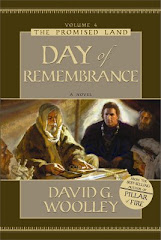
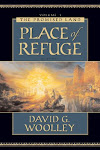
I promised I would return to blogging once Compass of God was written, submitted to the publisher, edited, and sent off to the printer. All that's done and I'm happy to report that I'm sticking my toes back into blogging waters and testing the temperature. Its been a while. How have you been?

You can check out Compass of God at Deseret Book Online (there's even a review written by the first reader of the novel, Anita Worthen), or you can wait until it appears on bookstore shevles sometime later in October to have a look.

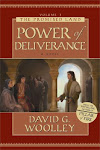
I'm busy writing volume 6, Land of Promise. I hope that doesn't confuse you. The full title: The Promised Land Series, Volume 6: Land of Promise, sounds like I'm stuttering. I'm not. There's a difference between a Promised Land and a Land of Promise, and I'm hoping to make that one of the major themes in Land of Promise which, incidentally, opens in the New World. Shocked? Did you ever think we'd actually get to the Americas in this series? Its a period of ancient history I've been itching to write about for over a decade. Hopefully you've been itching to read about it too. I'm almost "giddy" that years of ancient American research is finally coming out on the pages. Don't worry. I won't bore you with it. It will just operate in the background (and a little foreground) in support of the actors who people this series about the keystone of our faith--the Book of Mormon.

Hope you enjoy volume five. The managing editor at the publishing house, after reading Compass of God for the first time, said, "David, you really should write more romance novels." You'll understand what she meant when you get your hands on a copy. Let me know if you have a chance to read Compass of God. I'd enjoy reading your review. And stop in here at the blog from time to time. I plan on being a regular.

Its good to be back.

Monday, November 07, 2011

Backliner For Compass of God


The author doesn't get to see what's on the back of the jacket cover until the book is released in bookstores. So naturally, I was curious when the first copies began appearing in bookstores last week. I'm not exactly sure who wrote the blurb that appears on the back cover for Compass of God, but I have my suspicions. During the production phase, one of the editors assigned to this project shared with me her favorite passage from the novel--its a snippet of dialogue that also appears on the jacket cover where Ishmael is speaking to his very marriageable daughters. Gotcha Shauna. Here's a sample of her best backliner gushing:


Beautifully written, deeply moving, and highly intense, Compass of God is a novel about a tumultuous and spiritually significant period of history that sweeps the reader along in the events that take a Book of Mormon prophet and his family into uncharted regions of time, place, and the human heart.

The cast of characters is richly diverse and compelling in this story of political intrigue, intricate family dynamics, and spiritual awakenings. Author David Woolley has once again created a masterful blend of intensely researched details, adventure, and drama, and he has an unerring grasp of the complexity of human relationships in this unforgettable story of love, betrayal, faith, and forgiveness.

Filled with page-turning action, this superb fifth volume in the Promised Land series has all the elements that make for outstanding historical fiction. It is a well-orchestrated, breathtaking symphony of adventure, romance, and a fever-pitched battle between the forces of good and evil.

Tuesday, July 13, 2010

In Memory of Irene Sendler

by David G. Woolley

On May 12, 2008 Irene Sendler passed from this earth. She was 98 years old. A polish national living in Warsaw during the German occupation, she arranged with the Reichstag to hire on in sewer maintenance inside the Jewish Ghetto, a housing district the Germans sealed off and converted into a human holding area. What the Germans didn't know, was that Irene was an operative of sorts. An army of one. Commissioned by her heart, and advanced in rank by her conviction that freedom and liberty were the most precious gifts of God.

Neighborhood by neighborhood Jews inside the Ghetto were placed on rail cars and removed to concentration camps in Germany for extermination. As rumor of the Holocaust fed suspicion, mothers and fathers were convinced that the departing trains were not conveying their neighbors and friends to a better life outside the Ghetto. Desperation reached panicked proportion as parents tried to save their children from the hands of murderers.

Enter Irene Sendler. To German soldiers guarding the entrances to the Warsaw Ghetto she was a plumbing and sewer specialist with a large tool box and a three-speed, manual transmission covered black-box truck to transport her equipment. To the residents of the Ghetto she was a savior.

Irene trained her dog to bark uncontrollably at every Ghetto entrance. The soldiers didn't bother with the snarling mutt and let her pass without much more than a cursory visual check through the driver's window. The barking also covered the cries of Jewish infants hidden in the false compartment beneath Irene's tools. Children too large for the tool box were hidden in a burlap sack.

In all, Irene smuggled 2,500 infants and children to safety at half way houses around Warsaw and from there they were spirited out of the country. For her bravery the Germans broke both her legs, both arms, and severely beat her. But she survived her capture and guarded the names of all 2,500 children in a glass jar which she kept buried beneath a tree in her backyard until the war ended and she could help reunite the few Holocaust survivors with their children.

The year before she passed away, Irene was nominated for the Nobel Peace Prize. She was denied. The award was given, instead, to Al Gore for a slide show about global warming--an advocacy endeavor fraught with falsified data for which he has been richly rewarded with millions of dollars from global warming adherents. Here at the Top of the Morning we think Irene has gone on to far greater rewards than any King of Norway has power to confer.

Freedom and liberty. Irene never forgot the price of either and that's what makes her worthy of the true prize of peace.

Friday, July 02, 2010

The Dictates of Your Own Conscience

by David G. Woolley


In this Norman Rockwell classic painting titled Religious Freedom, we're reminded that the revolutionary period of American history was fueled by the desire to be free to express religious belief, free to espouse a doctrine of faith, and free from any government intrusion in our religious participation.

The religious freedoms our founders guaranteed in the constitution are desperately under siege from US citizen groups, but now elements within our government are beginning to narrowly define freedom of religion as only the freedom to assemble in a house of worship. Its okay if you want to get together at church, but don't go thinking you have the freedom to espouse doctrines that dissent from the Government's position on moral issues. If freedom of religion is nothing more than the freedom to assemble, why did the founders write both liberties into the Constitution?

Hillary Clinton, the US secretary of state, speaking at Georgetown University last December, made the chilling point very clear. You can assemble for worship, but you're not free to publicly espouse religious beliefs that are counter to the governments stand in favor of the pro-gay rights movement, the pro-abortion movement or the pro-social justice and socialism movements. That's from the state department which is only a hop, skip and a jump away from the justice department. And then what do people of faith do? In this Manhattan Declaration video, Dr. Colson explains the difference between the freedom of assembly and the freedom of religion which is, in a nut shell, the freedom to espouse specific religious doctrinal beliefs without any government intrusion or coercion.


Of all the freedoms we celebrate on this fourth of July holiday, freedom of Religion is the foundation upon which all other God-given rights are based. Freedom of religion was the roiling under current that carried the American revolution into being, it was the reason for the founding of America. We should not only be grateful for our religious freedoms guaranteed in the constitution, we should be as willing as were our founders, to be watchful and to stand as guardians in defense of the dictates of our own conscience. Our religious beliefs are our most sacred trust and the highest of all the unalienable rights granted by our Creator.

Happy fourth of July!

Thursday, June 24, 2010

World Cup Soccer "Vuvuzela (trumpet)" Update


With all the controversy over the horn-blowing vuvuzela soccer fans at South Africa's World Cup, this photo explains a lot. If you've watched any matches you may have noted that players and coaches are complaining they can't hear on the field. Sound technicians at television stations around the world have worked feverishly to find a way to filter out the horn-blowing that is even more obnoxious live than it is via satellite or cable. But really, do a few network computer geeks think they can filter out this trumpeter? I wouldn't want to be the one to keep his trumpet-playing from being heard.

In a crucial decision handed down by FIFA last week, the vuvuzela will not be banned from any World Cup stadiums. Trumpeting isn't only an African cultural artifact, its big business in thousands of kiosks surrounding each venue. And for our trumpeteer, its more than commerce. Its a mission. The vuvuzela is to South Africa's 2010 World Cup as hot dogs and apple pie were to the USA's 1994 World Cup. The Africans are buying the plastic horns in droves and, apparently, word has gotten out beyond the confines of Johannesburg. One of the most heralded horn-blowers of all time was photographed recently in the stands, lending his heavenly talents to the ruckus in South Africa this month. Doesn't he have family playing for Mexico, Honduras, Uruguay, Chile, Paraguay, Brazil, Argentina, Japan, or maybe even the USA?

Go USA!

Go Moroni!

Bring home the cup to the New World!

__________________________
Join author David G. Woolley at his Promised Land Website.

Wednesday, August 26, 2009

One Good Man


*Editor's Note: The Top of the Morning Staff has been waiting for director Christian Vuissa's (Errand of Angels and Baptists at our Bar-B-Q) next film to be released. Originally titled A Father in Israel, the movie is scheduled for release October 9th, 2009 under the title One Good Man with a subtitle of Life as a Latter-Day Dad. The movie has already won film society awards and accolades as a rich, authentic look at Mormon life. We hope you enjoy this film clip and spend a few moments reviewing the official One Good Man movie website for more details about this wonderful new addition to Mormon cinema. Christian Vuissa is fast becoming the source for high quality, artistic, heart-warming movies. We haven't seen the movie yet, but if it comes close to Errand of Angels we'll give it four stars and be tempted to go all the way to five. We'll let you know once the movie is released later this year.

Thursday, August 20, 2009

Today, Like The Days Of Noah


Editor's Note: A talented creator of LDS YouTube video favorites, davidkat99, has produced another powerful short in Today, Like the Days of Noah. The video compares the faith required to build Noah's ark on dry ground to the trials of modern-day discipleship. All the quotations and voice overs in the video are from General Authorities of the Church of Jesus Christ of Latter Day Saints. In the short discussion below, the creator of this video explains additional insights that led him to develop this presentation. The Top of the Morning staff, after a rather long summer vacation, is back in the Top of the Morning offices, and gosh, golly, jeepers, does it feel good to be back, ready for another year of our very best. Thanks for joining us for our yearly journey featuring videos, in-depth articles and of course, more on the Book of Mormon. We're getting back into "school" with this artistically rich, and prophetically thought provoking video from davidkat99.

From the Director, davidkat99:

It's been sometime since I have felt inspired to create another video. To tell you the truth, it has been nice to have a break and focus on family, reading, church and work. But I have felt strongly the need for this video to be created. A friend of mine, Karen Boren, a wonderful author and researcher found the quotes which prompted me to create this video.

There was only one time in history, where men were given in marriage to men, and women given in marriage to women. Want to venture a guess as to when? No, it wasn't in Sodom and Gomorrah, although that was my guess. Homosexuality was rampant there, of course, but according to the Talmud, not homosexual marriage. What about ancient Greece? Rome? No. Babylon? No again. The one time in history when homosexual marriage was practiced was during the days of Noah. And according to Satinover, thats what the Babylonian Talmud attributes as the final straw that led to the Flood.

"The generation of Noah was condemned to eradication by the flood because they had sunk so low morally, that, according to Midrashic teaching, they wrote our formal marriage contracts for sodomy and buggery--" Leviticus Rabbah 18:13. Quote from "Jewish Bioethics," Dr. Fred Rosner and Rabbi David Bleich, Ktav Publishing House, Israel, December 1999, page 219:

It is interesting that we are experiencing all of the same things that happened in the days of Noah. Same sex marriage laws have been passed recently in Connecticut and Iowa. Vermont and Maine will honor same sex marriage in September and New Hampshire in January 2010.

But as it was in the days of Noah, so it shall be also at the coming of the Son of Man; For it shall be with them, as it was in the days which were before the flood; for until the day that Noah entered into the ark they were eating and drinking, marrying and giving in marriage; And knew not until the flood came, and took them all away; so shall also the coming of the Son of Man be. JST Matthew 41-43.

Now this video is not about same sex marriage, but rather about the need we have to prepare both spiritually and temporally for what is to come.

__________________________
Join author David G. Woolley at his Promised Land Website.

Friday, July 03, 2009

Lives, Fortunes & Sacred Honor


Editor's Note: All of us here at Top of the Morning hope you enjoy this piece about the signers of the declaration of independence. May we all have similar courage and hold sacred our honor as did these patriots who, with us, across the span of two centuries, still stand for liberty in the face of government tyrrany.

Five signers were captured by the British as traitors, and tortured before they died.

Twelve had their homes ransacked and burned. Two lost their sons serving in the Revolutionary Army; another had two sons captured. Nine of the 56 fought and died from wounds or hardships of the Revolutionary War.

They signed and they pledged their lives, their fortunes, and their sacred honor. What kind of men were they?

Twenty-four were lawyers and jurists. Eleven were merchants, nine were farmers and large plantation owners; men of means, well educated. But they signed the Declaration of Independence knowing full well that the penalty would be death if they were captured.
Carter Braxton of Virginia, a wealthy planter and trader, saw his ships swept from the seas by the British Navy. He sold his home and properties to pay his debts, and died in rags.

Thomas McKeam was so hounded by the British that he was forced to move his family almost constantly. He served in the Congress without pay, and his family was kept in hiding. His possessions were taken from him, and poverty was his reward.

Vandals or soldiers looted the properties of Dillery, Hall, Clymer, Walton, Gwinnett, Heyward, Ruttledge, and Middleton.

At the battle of Yorktown, Thomas Nelson Jr, noted that the British General Cornwallis had taken over his home for his headquarters. He quietly urged General George Washington to open fire. The home was destroyed, and Nelson died bankrupt.

Francis Lewis had his home and properties destroyed. The Redcoats jailed his wife, and she died within a few months.

John Hart was driven from his wife’s bedside as she was dying. Their 13 children fled for their lives. His fields and his gristmill were laid to waste. For more than a year he lived in forests and caves, returning home to find his wife dead and his children vanished. A few weeks later he died from exhaustion and a broken heart.

Norris and Livingston suffered similar fates. Such were the stories and sacrifices of the American Revolution. These were not wild-eyed, rabble-rousing ruffians. They were soft-spoken men of means and education. They had security, but they valued liberty more. Standing tall, straight, and unwavering, they pledged: “For the support of this declaration, with firm reliance on the protection of the divine providence, we mutually pledge to each other, our lives, our fortunes, and our sacred honor.” They gave you and me a free and independent America.

The history books never told you a lot about what happened in the Revolutionary War. We didn’t fight just the British. We were British subjects at that time and we fought our own government! Some of us take these liberties so much for granted, but we shouldn’t, not in the face of modern government tyranny. Take a few minutes while enjoying your 4th of July holiday to silently thank these patriots, and then decide to stand with these uncompromising men of liberty and refuse to let tyranny destroy the gift of a republic they bequethed us with their lives, their fortunes and their sacred honor.

__________________________
Join author David G. Woolley at his Promised Land Website.

Wednesday, June 10, 2009

The Great Mormon Novel

by David G. Woolley

*Editor's Note: In a column titled Great Novels Need Doubt as Vantage that appeared in the Deseret News Mormon Times, religion editor Jerry Johnston lamented there would likely never be a Great Mormon Novel because he has, "known some marvelous Mormon wordsmiths. But being a Mormon is not like being Catholic or Jewish. There is precious little wiggle room for devout LDS writers. There aren't a lot of gray areas to explore."

Here at the Top of the Morning, author David G. Woolley suggests that the great Mormon novel will take the broken, first step stories and make them complete. And why not? If Mormonism is the fullness of the gospel, then shouldn't Mormon novelists be the ones who bring that fullness to storytelling? Here is David's response to columnist Jerry Johnston.


June 10, 2009

Dear Jerry:

The Great Mormon Novel is possible. It will happen. It will be faithful, uplifting, and embraced by those in and outside of the church for the very reason that it completes the now incomplete definition of the great novel by mending our broken stories where evil is personified as good, and completing our incomplete dramas where good is lampooned as evil.

The great Mormon novel won't chart new territory or break new ground as much as it will lead the reader to rediscover the storytelling path to our fullest mortal potential--the path that is lost in so much secularization.

The great Mormon novel will reacquaint men with the divine. It will celebrate the demands of gospel centeredness. It will rediscover what has been lost. It will restore faith in men, reverence for God and it will uncover the revelatory connection between heaven and earth. It will find joy in the work of building the kingdom. It will portray the shedding of one's ego and ambitions. And it will find its voice, not in the surrendering of one's ideas as you suggest in your article, but by celebrating the divine creativity that flows from discovering that the will of God is an infinitely more holy road than is the dead-end of half way back authorship. The community of great Mormon novelists isn't limited to Mormons who leave the fold and come half way back to the church. There is a more complete ending to every story than coming half way back.

The literati of our time celebrate redemption in the half way back story. The world finds comfort in those first redeeming steps. There is a certain worldly familiarity in the Aaronic Priesthood approach to redemptive storytelling, and since all storytelling is about redemption, the great Mormon novel will plumb the depths beyond those first preparatory steps and carry the reader into the restored fullness of the redemptive human drama.

The great Mormon novel will be a Melchizedek novel that takes redemptive storytelling through to is fullest, most complete, entirely natural dramatic high point. A temple climax set in the figurative tops of the mountains. It will give us hope that men are that they might have joy. Divine. Eternal. Joy.

The great Mormon novel won't be the investigator turned convert King Lamoniesque story. It will be the disciple, final stage, Enosesque story. The story of an active, bishop-like, tithe-paying, Relief Society President-like, moral, obedient, humble, temple-going, ecclesiastic supporting soul, who finds redemption not in the preparatory steps of coming back into the fold, but in the sanctifying graces of the life of discipleship, adopting God's will as his own. Isn't that the message of the restoration? Restoring an understanding, not of the first principles and ordinances, but of the divine potential in each of us? The great Mormon novel will give the reader a glimpse of their divine end while they are yet living in the earthly pages of their mortal beginnings.

It will happen Jerry. New wine will be poured into new bottles. The great Mormon novel will be written. The old rules of literary critique will be discarded for new ones. The old ways of viewing a novel will become new. The world will unwrap our literary gift left under the tree and know us better. The pages will be salted with inspired inklings and prophetic foreshadowings and when the reader arrives at the last page, she will close the book and say, "I knew it was going to end like that." And by knowing us better, the world will know that though the end is foreshadowed in the beginning, the satisfying climax isn't in the first steps of coming half way back along the narrow way or the opening scene of chapter one, but in enduring to the sanctifying conclusion. Which is, as in all great stories, The End.


Sincerely,

David G. Woolley
LDS Novelist

__________________________
Join author David G. Woolley at his Promised Land Website.

Friday, April 10, 2009

The Four Most Caring Words (Part I)

by David G. Woolley


Editor's Note: We promised part III of the Language of Nephi and we still plan to deliver. We're just building suspense and maybe some bad will. Sorry. Check back in a couple of days for what we think will be a very interesting post. Until then, please indulge us our economic view from the fiscal desk.

In this initial The Four Most Caring Words post we examine our current economic crisis by looking at some spending numbers. Then in Part II and Part III we'll have a look at similar economic booms and busts from the Book of Mormon. There really is some hard economic data in the Book of Mormon on nearly all the economic principles driving the current crisis. In the final post of The Four Most Caring Words series we'll detail the recommendations in the Book of Mormon for getting out of this kind of economic mess and how to avoid it in the future by adopting the heaven-ordained economic mind-set. Hope you enjoy our newest series The Four Most Caring Words. And don't forget to check back for our continuing series on the Language of Nephi. So many series, so little time.


According to Elder Robert D. Hales in a discourse given during last weekend's LDS General Conference we can't afford it are the four most caring words you can speak. Here at Top of the Morning we agree. Have a look at our video clip above which graphically illustrates our point. Debt has far too much power to trash free agency and when you get into the subtle and nuanced business of depriving your brothers and sisters of their free agency you're planting your feet solidly on evil territory. It’s no wonder the prophetic council for our day is to get out of debt and stay out of debt. Sadly, during the past fifteen or twenty years of economic plenty, households spent far too much on wants, over-extended their credit, and saved less than any other generation in the history of financial record keeping. It was a collective miscalculation that the good times were gonna keep rolling. We ignored the most caring words and told ourselves not to worry, we could afford it.

If debt is bad for households, can it still be a good idea for, say, the people who print the money? We don't think so. In fact we think that the only difference between micro household debt and macro national debt is the number of people it enslaves by removing their freedom to choose, essentially limiting their free agency, removing the path to self reliance and making large segments of the population dependent upon government dole. We're of the opinion that this massive spending is potentially satanic in the sense that it has the potential to enslave an entire country and possibly the entire globe by threatening the freedom to be self reliant, self determining and free. Permit us an adjusted-for-inflation dollar chat in support of our opinion.

The Bear Sterns bailout last October 2008 came in at around 29.5 billion dollars, give or take a few bonus compensation packages. Compared to the cost of building the Panama Canal at $790 million dollars or the Hoover Dam at $78 million dollars, that one bailout alone could buy Americans a Panama Canal for every state in the union with water to spare. That's a lot of waterway transportation infrastructure. Likely too much. If you add the $97.2 billion to bail out Bank of America and another $97.4 billion for the Chrysler and General Motors bailouts you've got the equivalent of about 350 Panama Canals. That's enough canalary for every river, stream and donnybrook on the planet. And that doesn't even include the $112 billion dollars for AIG. The AIG mess alone is almost as much as we spent on the entire Marshall Plan to rebuild Europe after WWII which cost us $115 billion inflation adjusted dollars.

Most of you may not have noticed the day the US government handed over $139 billion to General Electric. The CEO, Mr. Immelt, is on the President's economic advisory team which makes that bailout just a little questionable. It’s the sort of economic back scratching that has been the foundation for strong, healthy secret combinations since the day Cain slew Able. If you include the $235 billion dollars for Citigroup the running total reaches $710 billion dollars for big banks and corporations and we're just getting started.

The $300 billion for home owners who can't pay their mortgages is just slightly below the entire cost for World War I which came in at a whopping $324 billion. That's the entire cost. Them. Us. And every warring nation in between. Thankfully it’s not as much as the $400 billion handed to Fannie Mae and Freddie Mac last month. Those are the two government owned and operated lending firms that pretty much precipitated this entire mess and no one blinked an eye when congress last week passed out $220 million dollars in bonuses to the Fannie and Freddie people who recklessly approved loans to borrowers they knew could never pay them back. We were likely too busy being angry about the $218 million dollars in bonuses that went to AIG people to get mad at congress for slipping $220 million dollars of bonuses under the table to their friends at Freddie and Fannie. Or maybe we were just so inundated with bailout burnout to keep track any longer. But I can't help keeping track. The secret combinations just keep piling up.

These government spending numbers are ginormous. Anyone of these programs or packages would rank among the largest spending programs in US history. In fact, each one, separately, qualifies as record breaking for any spending program since the beginning of time. Nothing compares to this. Ever. Each spending program approved by congress and signed into law by our president, by itself, is right up there with the entire New Deal that totaled $500 billion in spending. Yes. The entire fifteen years of New Deal dole.

Now add to these spending programs the TARP money (Troubled Asset Relief Program) at $700 billion dollars and don't forget the $787 billion dollar stimulus spending package--that thousand page bill congress never read, and you end up with a grand total of codified into law, already spent 4.3 trillion mind-boggling dollars to date and that's only four months into this mess. That's eight times the cost of the New Deal and it even beats the all time record holder, World War II at 3.4 trillion inflation-adjusted dollars.

Unfortunately that isn't the end. Our president and congress have committed to spend up to 7.8 trillion more dollars in new programs over the next 8 years. That's new dollars, above and beyond what it would take to operate the government each year had we kept with our previous budget projections. Add it all up and you get a whopping 12.2 trillion dollars. That's twenty-four times the cost of the New Deal and we managed to spend it in four months not fourteen years.

With a budget like this we could Panama Canal across every land mass on every planet, orbiting moon, and asteroid in the solar system. Water or no water. There's simply no way to raise this kind of money. We don't produce enough goods and services in America to tax our way out of this spending predicament so our government has made the precarious decision to borrow from our increasingly wary creditor. China.

When all these Chinese debts come due, the US will likely be forced into some kind of bankruptcy. But since there is no such thing as a federal bankruptcy, and there’s no way on earth we can work our way out of this kind of spending morass, our money becomes worthless. We can't buy anything. We can't sell anything. We can't convince anyone in the world to loan us money or ship us goods, or food, or oil. It is a perfect economic storm of our own making. For years our government muted the four most caring words, and now those excesses of spending on too many things we wanted but didn't really need has precipitated a crisis, we are beginning to regret our collective political silence.

Or are we?

We know we can't afford all this spending. The government knows we can't afford it. And the government knows that we know we can't afford it. But still we passively persist in the engorgement of government through unprecedented debt on the fear that our propserity will collapse when we really should be tightening our collective spending belt. Really tight. Painfully tight. Budget-reducing, program-reducing, benefit-reducing, entitlement-reducing, lean-on-your-family, your-food-storage, and your-faith-in-God tight.

In our Top of the Morning opinion, the only solution, and it is a solution available to us through a narrow time-window of likely ten or twelve precious-short months before we pass the spending point of no return, is for government to stop spending now and repeal much of the obligations signed into law over the past four months. That or we may end up paying what I can only articulate as the dreaded double tax.

The government can't tax dollars we've earned, paid taxes on and put securely away in savings. At least not by the current tax code. So what do they do with those trillions of dollars Americans have earned and placed in savings accounts or taken out of the stock market and placed in safe haven financial instruments during the past six months of financial panic? They make your money worthless. That's right. The government does it by printing new dollars. Lots of new dollars without borrowing the value of those dollars from a creditor through the sale of US Treasury Bonds.

The government took the first step toward the double tax a few weeks ago when the FED announced they were monetizing the debt, essentially cutting the tie between the printing of money and the borrowing of the value of that printed money in the form of a government IOU, what money people call the purchase of government debt by the FED without tying that purchase to any debt instrument like selling bonds to foreign governments. Mainly to China. The initial result of monetizing the debt to fund the printing of money rather than funding debt through taxation sent gold prices soaring nearly $80.00 an ounce in less than ten minutes of trading. The second knell in this death march was more subtle than the intial monetization. Over the past three weeks the government has had a rather difficult time selling bonds. No one wants to buy them unless we twist their arm. American debt has become a rather high risk venture so the interest rates we pay to China have soared along with the price of gold. You can't blame China. Can a government that borrows from itself, essentially writing itself an IOMe, still be taken fiscally serious by any intelligent creditor for very long?

Likely not.

The more deadly result of all this printing of money and monetizing of debt kicks in when all those dollars are passed out and begin flooding the economy at the mall, the gas pump, and the grocery store. Inflation. Too many dollars chasing too few goods and services. This is not your normal annually adjusted, warm fuzzy, when-I-was-a-kid-a-candy-bar-cost-ten-cents inflation. Which is followed immediately by loss of faith in the dollar. An inflation induced panic. At the current rate of government spending, inflation could reduce the buying power of your savings in half, or a third or an eighth of its current value. Or worse. That’s what economists mean when they say the current level of government spending has the potential to wipe out family savings and make large segments of the population dependent on government dole. What no one is talking about is that may be precisely the aim of all this spending: to make you dependent on government programs rather than providing you with the tools and the freedom to become self reliant. And you thought the government couldn’t tax the money you stuffed under your mattress. Wrong.

We can't afford it. These are the four most caring words you can utter and you may want to make sure your government leaders hear them from you again and again until they begin to understand the terrible consequences of debt powerful enough to enslave all of us in a free-fall from economic free agency into an the abyss of economic dependency. For the remainder of our lives.

Join us for our next post in the Four Most Caring Words series when we examine similar boom and bust dilemmas in the Book of Mormon, beginning with the ancient economic principal that has been at the root of all heaven-ordained economies. Thou shalt not covet. That command, or the lack of abiding by that edict, reiterated by Elder Boyd K. Packer in last week's LDS General Conference Priesthood session, is at the root of all the ancient economic data coming out of the Book of Mormon. The hard numbers are in that restoration scripture if you know where to look. And we plan on taking a very hard look.

Until the next post, Top of the Morning to you.

__________________________
Join author David G. Woolley at his Promised Land Website.

Monday, March 30, 2009

The Language of Nephi (Part III)


Editor's Note: We've been verifying all sorts of complex linguistic and archaeological data with important Book of Mormon accounts for part III of the Language of Nephi. That's our excuse for not posting part III sooner. The Top of the Morning staff is really excited about our next installment and we're nearly complete. Check back in the next twenty four to forty eight hours for what we think will be a fascinating look at the Language of Nephi, the City of Nephi and exactly how Mosiah's spoken tongue and written language likely mixed with the language of the Mulekites at Zarahemla, three centuries after Lehi arrived in the New World. Thanks for your patience.

Saturday, March 07, 2009

New Book of Mormon Epic Movie


Editor's Note: Despite the economic downturn, the Top of the Morning staff is still on track to release a new Book of Mormon epic by the end of the year. Unlike previous attempts we've spent millions on casting just the right actors in every major role. The sets, special effects and costume design are academy award quality. And our on-location filming is worthy of top cinematography honors.

The script is one of the finest to grace the silver screen, but we're not blind enough to think we can overcome the most difficult obstacle in an epic project like this. The book is always better than the movie. Take a look at our Top of the Morning trailer and let us know what you think of our casting selections, special effects and award winning set designs.

We hope you agree that we've got a winner, but we need your feedback. Thanks for watching and thanks for posting a comment.

Tuesday, March 03, 2009

The Language of Nephi (Part II)

by David G. Woolley

Editor’s Note: The staff here at Top of the Morning is excited about our second installment on the Language of Nephi. You can read Part I of this series right here. Thanks for joining us for another look at the Language of Nephi which we believe you'll enjoy even more if we sub-titled it the alphabet included logographic system. Don't worry. We'll explain.

The Book of Mormon mentions two languages, the Language of Nephi and the Language of the Egyptians. Were they related? Was one used by the Lamanites and the other by the Nephites? Or were they different names for essentially the same language? Were they a collection of written characters or a spoken tongue? To understand the obsession Book of Mormon scribes had for their language you may want to view language as they viewed it, as an almost exclusive reference to written characters. For ancient Nephites and Lamanites the spoken tongue was another matter, but it likely wasn't considered their language or what today linguists define as a system of symbols for communicating ideas.

Written language doesn't evolve as quickly as the spoken tongue, but changes do occur over time, influenced almost entirely by the more volatile changes in the phonetic language. Once the Nephites were established in the New World, the term Language of Nephi was a logical distinction for their evolving written language. Moroni’s declaration that their reformed Egyptian characters were influenced by changes in the spoken tongue is an authentic expectation of the written Nephite language evolving in geographic isolation from the mother script.

What we usually refer to as Egyptian hieroglyphics began as a collection of characters, each one representing a whole concept. Symbols were later developed to represent the sounds in the spoken language, what we call an alphabet. Instead of discarding the hieroglyphic characters for the newly developed alphabet, Egyptians combined the two by inserting letters from the alphabet alongside hieroglyphic characters. The result is what scholars refer to as the alphabet included logographic system. For three thousand years the Egyptians wrote in a jumble of phonetic and pictographic characters. Writing was a difficult skill to acquire and the ancient Egyptian school children fortunate enough to afford an education were schooled in the difficult skills of letters.

Egyptian children weren't the only students. Around 610 BC, Egypt reached its pinnacle of influence across the ancient world. Similar to the Lamanite educational experience, the written language of choice in Lehi's day was tied to economics. English in our modern world won that same enviable status. An understanding of Egyptian script carried with it the possibility of wealth and every Phoenician, Assyrian, Greek, Arab, and Babylonian clamored to learn the language of prosperity. Egyptian teachers found employment in the homes of wealthy Hebrews, Assyrians, Ethiopians, and Greek businessmen where they taught the language of commerce—the Language of the Egyptians. The Book of Mormon begins with a very authentic reference to the education of the sons of Lehi. Though Laman, Lemuel, Sam and Nephi spoke Hebrew, they were instructed in the written characters of Egyptian origin.

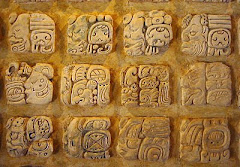
Chinese scripts, like the ones pictured above, and Mayan scripts pictured below, are further excelent examples of alphabet included logographic systems. In order to read the scripts you must first learn the meaning of hundreds of characters. It's a difficult challenge. It’s also considered an achievement. The difficulty inherent in these complex writing systems makes the spread of literacy in the general population difficult, but the numerous benefits include a sense of multilingual capacity. Chinese and Japanese speakers can't communicate orally, but since both groups use the same characters they can write to one another. Educated peoples of the ancient near east followed the same pattern. They spoke different languages, but they shared the same written characters.

Nephi spoke Hebrew, but wrote using Egyptian characters. A thousand years later it’s likely that Moroni knew nothing of Hebrew. In fact his name, Moroni, is a Jaredite name likely from the Zoquean/Olmec language spoken along the Atlantic Gulf Coast north of the narrow neck of land. It means one from Moron, the ancient Jaredite Capital and also the general location from which his father Mormon migrated to Zarahmela. Nephi's Hebrew tongue was swallowed up by the lingual tide of the much larger Meso American populations speaking the dominant dialects of the Pacific coastal highland regions. If spoken Hebrew survived all the way down to Moroni's day it was preserved among very few in the royal ruling class of Nephites--a difficult and highly unlikely preservation of a linguistic artifact that required a thousand years of vigilance. Throughout history the spoken tongue of the smaller population is nearly always lost in the language of the larger, dominant population and it’s likely that Moroni, if he were to meet Nephi, would not have been able to communicate orally. However, by using the alphabet included logographic system of the Language of Nephi, Moroni could have written to his prophet colleague.

It appears that the characters in the Language of Nephi were likely used by speakers of different tongues which would explain the fundamental lack of any reference for the need of interpreters as the Nephites governed what became a multilingual nation no later than 130 BC and likely as early as Nephi's inland migration from the Pacific coast to the highlands at the City of Nephi. This early multilingual diversity among Nephi and his people recalls the account of Sherem, an outsider who likely learned the phoenetic Hebrew tongue and the pictographic written Nephite script and used his acquired skills to study the Laws of Moses and his oral skills to counter the doctrines taught by the Prophet Jacob.

Ancient Meso Americans contemporary to the Nephite Civilization (580 BC to 400 AD) are refered to by archeologists as pre-classic Mayans (550 BC to 450 AD) living in southern Mexico and Guatemela. The overlapping time periods for the rise of these civilizations are identical and evidence from both cultures suggest their language systems were similar if not the same. The Mayans spoke hundreds of dialects in four major language groups. Quiche, Chol, Yucatec, and Tzeltal. We know that the Nephite and Lamanite civilizations, taken together, spoke at least three dialects. Nephite, Lamanite, and Mulekite. The Book of Mormon also hints at multiple spoken dialects among the Lamanites. And Alma's mission to the out-post city of Amonihah high in the Pacific Coastal mountains in the extreme northern territories of the Nephite Kingdom may have been, for him, a foreign language mission. Its likely that the larger Lamanite population spoke many languages. Despite their lingual diversity, Book of Mormon civilizations and Mayan civilizations used a similar alphabet included logographic system which may explain why Book of Mormon scribes remain silent about any need for translation when Nephites encountered Lamanites. It also explains the fascination for Lamanite scribes for teaching the written Language of Nephi throughout the Lamanite kingdom as a means to breakdown language barriers between multilingual subjects, improve communication, expand trade, and increase wealth.

The alphabet included logographic system of writing is beset with exponential ambiguity. Take the Egyptian character for Lotus flower. It’s also the character for the numerical concept of a thousand. And then there is the sheer problem with language capacity. Ancient scribes couldn't create pictures for every expression of thought. When they determined that the number of characters didn't begin to match the countless ideas requiring expression or the ever-expanding lexicon of words in the spoken language, Chinese, Mayan and Egyptian scribes did what Nephite and Lamanite scribes likely did. They assigned different meanings to the same characters. It was a formula for confusion and to fix the increasing number of ambiguities additional characters were placed alongside the characters of double meaning. It's a classic case of determinative modifiers. The additional characters provide the context, essentially requiring the reader to read the entire phrase in the text to understand the intended meaning of a single character or risk serious misunderstanding. Speed reading was next to impossible. Moroni was likely referring to this determinative modifier frustration when he very authentically recorded that wherefore, when we write we behold our weakness, and stumble because of the placing of our words; and I fear lest the Gentiles shall mock at our words. (Ether 12:25)

Mayan writing lacked the same precision that elicited Moroni's complaint. Linguist Sir Eric Thompson informs us that, "the reader had to have a good background of mythology and folklore to comprehend the texts." It’s that same idea Nephi was trying to convey when he tells us that a background in Jewish culture was needed to understand the context of Isaiah's writings(2 Nephi 25: 1-2,5).

In Part I of this series I pointed out that Hebrew words, grammar and the conceptualization of Hebrew ideas has been identified in Mayan writing like the glyphs you see pictured below. That makes sense to readers of the Book of Mormon if indeed it was Hebrew speakers who introduced the new communication tool of a written language into a multilingual population already living in the Land of Nephi when Lehi and his family arrived. What has not been identified in Mayan writings is any Egyptian word or phrase. The lack of any Egyptian word would suggest caution on the part of researchers unless, of course, you consider the entire alphabet included logographic system of the Mayans nothing less than the prodigal son of the Egyptian mother language.

Join us next week for Part III of this series, the Language of Nephi, when we take a closer look at the beginnings of the Mayan Language at Kaminal Juyu in highland Guatemala around 550 BC and why, among many other factors, those Mayan glyphic writings like the ones you see pictured to the right, led Book of Mormon scholars to suggest this location as the original City of Nephi. The language that disseminated from this location was the civilizing force that catapulted Mayan culture into the most advanced civilization of the ancient New World. Is it possible that the Language of Nephi influenced the only ancient American culture between Alaska and Tierra Del Fuego to develop a written language? Join us next week when we explore the language artifacts surrounding the City of Nephi.

__________________________
Join author David G. Woolley at his Promised Land Website.

Sunday, February 22, 2009

The Language of Nephi (Part I)

by David G. Woolley

Editor’s Note: The Top of the Morning staff is pleased to introduce the first in a four part series on the Language of Nephi and its influence on the rise of an Ancient New World civilization. We’re also happy to be back after a three week hiatus. Top of the Morning went private after we decided that maintaining our beloved blog required far too many resources in research and writing time for such a small audience. However, due to communications received from previously unknown readers, we’ve decided to return to the blogosphere on a provisional basis. Please let us know you’re reading by leaving a comment, signing up as a follower, or by telling your friends about Top of the Morning so we don’t make the same mistake again.

What exactly was the Language of Nephi? A spoken tongue from an oral tradition? A written language? Did it adhere to the modern dictionary definition of a systematic means of communicating ideas or feelings by the use of conventionalized signs or was it something completely different? Was it like modern English or Spanish or French where each written letter represents a sound in the spoken tongue? Or was it more like the flowing, artistic Chinese logographic characters with no connection to the sound in the oral language? How was the Language of Nephi related to the reformed Egyptian characters Moroni tells us were passed down and altered over the centuries? (Mormon 9:32)

Nephi tells us he made his record in the learning of the Jews and the language of the Egyptians. What did he mean? He spoke Hebrew in Jerusalem's market place and over the dinner table with his brothers and sisters. He spoke it traveling the trade route across Arabia and in the New World. Despite the possibility that he may have learned one of the many dialects of the four major Mayan languages spoken across Meso America, he likely continued speaking Hebrew throughout the remainder of his life.

When Nephi mentioned the learning of the Jews in the opening verses of the Book of Mormon (1 Nephi 1:2) he was likely referring to all things Jewish. Religious observances. Belief. Home schooling. Private education. Merchant trade. Theft. Perfumes. The Laws of Moses. Robber bands. Weaving. Music. Agriculture. Olive harvest. Wine harvest. Grain harvest. Robbery. Prophets. Architecture. Dancing. Blacksmithing. Bartering. Conspiracy. Prophecy. Carpentry. Sorcery. Milling. Baking. Corruption. Money changing. Taxation. Military tactics. Graft. Financial loans. War. The collection of debt. The fishing industry. Stone cutting. Government opression. Irrigation. Soothsaying. Reading. Writing. And arithmetic. In essence, the depth and breadth of Jewish ways. The learning of the Jews was what today we would likely call ancient Jewish culture.

Nephi grew up in Jerusalem. He observed the performances and ordinances of a people living under the rule of the Law of Moses. He understood their traditions. He celebrated the Passover and the harvest feasts. The metaphorical symbolism of their holy days was as natural to him as drinking water from Jerusalem’s ghion spring. Shepherds herding sheep were a common sight. Listening to temple priests reading the law from the steps of the temple was required religious education. He likely heard the shofar horns at the temple and knew the aroma of frankincense sold in the market. He'd felt the dry heat of a Jerusalem summer and the taste of oil olive cultivated and pressed in the surrounding vineyards. All of this was part of the learning of the Jews. And from those experiences he understood the metaphors and poetry of Isaiah. It isn't surprising that Nephi insisted that an intimate knowledge of all things Jewish was necessary to understand the writings of Isaiah (2 Nephi 25:5). He'd seen with his own eyes the things of the Jews. He understood the writings of the prophets in a way his Meso American children, unfamiliar with Jewish culture, could not. It was a carefull balancing act. Nephi wanted his children to understand Isaiah, but he was careful to hold back cultural knowledge he believed had the potential to introduce the sins that contributed to the destruction of the Jews. Nephi understood the need for cultural awareness in order to fully understand the writings of the prophets in the same way that Meso American linguist Sir Eric Thompson understood how best to interpret Mayan writings. According to Thompson the reader, "had to have a good background in mythology and folklore to understand the texts."

A number of Hebrew linguistic patterns have been identified in the translation of the Book of Mormon text including the transliteration (the preservation of pronunciation of a word during translation) of Book of Mormon names from their original form into English. Mayan linguist Dr. David H. Kelley of the University of Calgary believes he's identified the first Hebrew words adopted into the Mayan dialect and preserved in the names of three of the twenty days making up a Mayan month. One of the day names on the Mayan calendar is k, pronounced k-eh, which means hand. The Mayan glyph used to communicate the name is the picture of a hand and it corresponds to the Hebrew letter k pronounced kaph which also means hand in Hebrew. The very next letter in the Hebrew alphabet is lamed and the next day on the Mayan calendar is lamat. The Mayan day immediately following lamat is mulu which means water and the next letter in the Hebrew alphabet after lamed just happens to be mem which also means water. It is a sequence of three Mayan days which correspond to three sequential letters in the Hebrew alphabet.

Despite this evidence and other influences of ancient Hebrew words and grammar on the Mayan language, there continues to be no evidence of Egyptian in any Mayan word or linguistic pattern. Or is there? Nephi thought in the conceptual framework of an Israelite from an authentically Jewish culture. He normally spoke and wrote in Hebrew and there is little doubt that he kept his records, at least conceptually, in Hebrew. So what did Nephi mean when he said he wrote his record in the language of the Egyptians? Centuries later Moroni essentially reaffirmed Nephi's statement when he wrote that, "we have written this record according to our knowledge, in the characters which are called among us the reformed Egyptian, being handed down and altered by us, according to our manner of speech" (Mormon 9:32). It seems rather confusing unless you understand exactly what was meant by the Language of the Egyptians. Its a complex puzzle that researchers are finally unraveling and a more complete mosaic authentically places the Book of Mormon into its ancient New World setting.

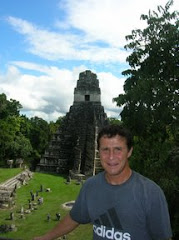
Join us next week for Part II of this series, the Language of Nephi, when we take a closer look at the Language of the Egyptians and how it may have influenced Mayan writing like the glyphs you see pictured above which had their beginnings around 550 BC near the likely location of the City of Nephi. Today the ruins, burried underground and pictured to the right (click to enlarge), are known as Kaminal Juyu and the language that disseminated from this location was the civilizing force that catapulted Mayan culture into the most advanced civilization of the ancient New World. Is it possible that the Language of Nephi influenced the only ancient American culture betwen Alaska and Tierra Del Fuego to develop a written language? Join us for our next weekly logographic post as we decipher the Language of Nephi.

__________________________
Join author David G. Woolley at his Promised Land Website.

Wednesday, January 21, 2009

God Bless President Obama

by David G. Woolley

I didn't vote for President Obama. And if the election were held again today I wouldn't vote for him. But I happily, and with all my heart say, "God bless President Obama."

I disagree fundamentally with President Obama's social and economic agenda. Printing billions of yen on a printing press and flooding the economy with those yen did absolutely nothing for the Japanese economy. It was a decade of failed government bail out philosophy aimed at turning the tide on terrible recession.

It will do nothing for the United States.

I am no fan of government regulation, but despite that conservative view, I favor changing the rules on banking and bringing the entire global economy under stiffer regulation including hedge funds which are in the category of too-big-to-fail. That's where Obama should focus his economic recovery efforts: changing the monetary policy of not just the US but of countries across the world with an emphasis on not allowing any financial institution to become too big to fail and prohibiting financial institutions from taking risks too large for their balance sheets to cover.

I am concerned that President Obama will cripple the free flow of ideas, money, and entrepreneurship across state and national borders, in favor of taking steps towards monolithically slow, cumbersome, unwilling-to-change government-run institutions in not only the financial sectors, but other industries as well. I fear we will wake up one morning and say, "Woe is me, they have taken away our innovation, our creative ideas, and our economic freedom and left us with a society of waiters.” Waiting in line for everything from milk to money.

I wish President Obama would put aside ideology in favor of the economy. He has asked conservatives to give on government regulation issues as they pertain to financial institutions, but he has not asked Liberals to satiate their appetite for government intervention and spending when it clearly is not the answer and has proven time and time again to do nothing but ease our pain in the near term while prolonging the suffering over the longer term.

President Obama is clearly not willing to give up the liberal spending ideas, but he is asking conservatives to back off on government regulation.

I didn't like then candidate Obama’s economic approach in July. I was more concerned about it in October. I do not support President Obama’s economic plan in January.

That's why I wouldn't vote for him if the election were held today.

And then there are all those nasty, emotion-packed, social agenda issues that tell us much more about a person’s private morality than they ever have power to socially engineer our country toward some sort of conservative or liberal utopia. I don't agree with nearly all, if not all, of Obama's social agenda. I think it stinks.

That said, I can honestly, and with all the hope in my heart ask God to bless President Obama. No matter what your political persuasion, you can only hope that he will have the humility to hear the wisdom echoing down through the centuries from inspired founders and have the desire to be, like them, inspired of God and follow the divinely revealed lead in the unchanging principles enshrined in our constitution—something the news media decried in George Bush, but may laud in President Barack Obama.

So I say again, God bless President Obama.

__________________________
Join author David G. Woolley at his Promised Land Website.

Thursday, January 15, 2009

My Rocket Scientist Friend

by David G. Woolley
My friend, Scott, happens to be a rocket scientist. Everyone should be so lucky to have at least one rocket scientist friend. The guy is a genius. And his four sons are little geniuses in waiting. Just ask his wife Diana. Or the grandparents.

After chasing a Ph.D. all over the country Scott settled down at ULA. I don't know what that means exactly. It has something to do with rockets, terrorists, the CIA, and home teaching. This week he sent out an announcement about a rocket launch. Lucky for me I haven't been banned from his family email group. Yet.

It went something like this:

For those who are interested, a Delta IV Heavy rocket (our biggest rocket and the one that I work on) will be launching from Cape Canaveral tomorrow (Jan 13) evening at around 7:49 pm EST. Our boys enjoyed watching the last ULA rocket launch, so I thought I would pass along this info in case your kids (or possibly even you) might be interested. This rocket will be launching a National Reconnaissance Office satellite in support of the military's national defense mission. In other words, this satellite will be taking pictures of you as you mow your lawn in your back yard, as well as pictures of Osama Bin Laden building nuclear weapons in Afghanistan.

Didn't I tell you this guy is brilliant? But he's this average Joe like, well, me, except that I'm not bald and my emails lack any evidence of formal schooling. So its pretty hard to believe that he actually does what he claims he does. I responded to his email with this:

Cool photos Scott. Where did you get the real-life looking flames and the menacing background sky? Does it come with the kit? The ones at wal-mart do. I'll bet you and the boys have a lot of fun chasing it down after the parachute opens.

I hope you're not like some of the nut cases I run into here. These wanna-be brainiacs show up at the park with their I'm-so-cool rocket launchers while the rest of us are trying to enjoy the park. Don't they know its not safe? I chased one self proclaimed rocket scientist right back to the parking lot. He was launching like five ULA IV Heavy Rockets right in the middle of the play ground. Can you believe that? What a jerk.


Instead of replying with some of his infamous wit, or a dash of sarcasm he sends a methodical, calculated, emotionless, detached, hum-drum, almost aloof, but all too expected rocket scientist email like this:

Unfortunately, the launch has been postponed. The new launch window is Thursday, Jan 15, 7:41-11:41 pm EST. Prior to filling the rocket tanks with liquid hydrogen and oxygen, the tanks are purged with gaseous nitrogen, because the extremely cold temperature of the liquid propellants would cause the water in the air to condense. A gaseous nitrogen relief valve was not working properly, necessitating the delay of the launch so the valve could be fixed.

This is the first time in the 17 launches we've had since I joined ULA that the launch has been delayed on the day it was scheduled. It, of course, had to happen the one time that I email family about the launch. Sorry about the delays.


That was it. A memo-like response. No self depreciating rocket scientist humor. So I fired this email off without considering any of the consequences:

I don't mean to burst Scott's fantasy rocket scientist bubble, but here's a quick glossary of terms and phrases that may help you understand his recent launch emails:

1. Launch has been postponed.

Translation: Diana (Scott's wife) made me and the boys stay inside and clean our rooms

2. New Launch Window.

Translation: We tried sneaking out the backdoor.

3. Purge tanks with gaseous nitrogen.

Translation: Before we sneaked out the back door I made the boys use the bathroom.


4. Cold temperature of liquid propellants causes the water in the air to condense.

Translation: Spray Lysol when finished purging.

5. Necessitating a launch delay to fix the valve.

Translation: Where is that plunger?

6. The first time in 17 launches since I joined ULA that a launch has been delayed.

Translation: We got busted going out the backdoor.

7. It happened the one time I emailed my family.

Translation: Mom and Dad, can you please have a talk with my wife?


There you have it. The complete guide to understanding emails from a self proclaimed rocket scientist. Lets hope that rocket launches today or this could get ugly.

So what are the rest of you doing these days? Not that I would twist your words or your world around or anything.

Just curious.

__________________________
Join author David G. Woolley at his Promised Land Website.

Thursday, January 01, 2009

TOTM Celebrates New Year at Disney Land


Editor's Note: Mickey Mouse and executives at Disney were so excited about the completion of our first year of publication at Top of the Morning they've dedicated the entire 2009 New Year to the TOTM Blog featuring informative, entertaining and uplifting commentary and opinion with special installments dedicated to the fascinating history, archeology, and Book of Mormon writings that inspired the publication of four works in the Promised Land historical fiction series and continues to inspire the writing of four more. Author David Woolley and the TOTM staff were left without words.
View this video and you'll understand why we're speechless. If you look closely you can find David G. Woolley in the video clip over the left shoulder of the announcer. He's wearing sunglasses and his patented under cover gray t-shirt. Did you find him? What an honor for all of us at TOTM to be part of the Disney celebration. Its our first and happiest new year so far.

To each and everyone of our TOTM readers we wish you the happiest of New Years in 2009. Join us for twelve months of uplifting posts we hope will lighten your load, lengthen your stride, and make walking the narrow path a little more enjoyable. Thanks for the company.

Happy New Year everyone.